


Data in the air || Decisions on the ground || That is Unmanned Aerial Vehicle Operator's job
Date: 6 August 2026


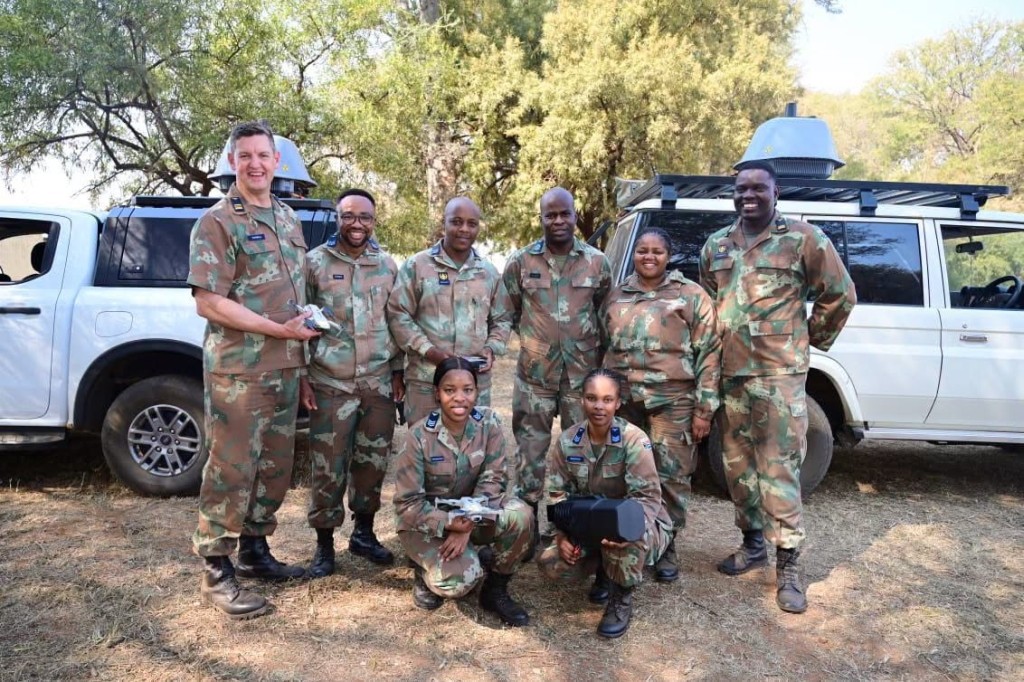
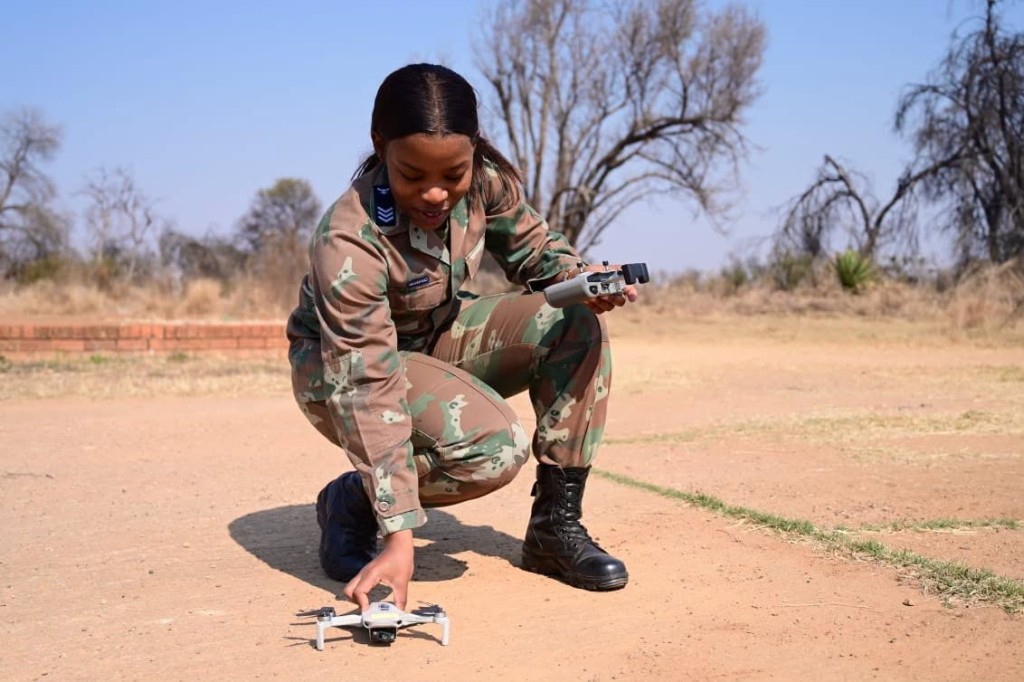
Four members of the South African Air Force successfully completed drone operator training and received their certificates during a ceremony officiated by Brigadier General Jan Augustin, Director Command & Control Systems, at Ditholo Training Centre on 23 July 2026.
According to Lieutenant Colonel Terence Turnbull, who presented the training, the course is vital because it ensures battlefield survival, precise targeting and seamless communication.
"The training is vital because it ensures battlefield survival, precise targeting, and seamless communication. Key factors include tactical integration, resilience under pressure and field maintenance. I have been fascinated by Unmanned Aerial Vehicles since they first entered the market, and I have invested my time and energy in ensuring that the skills I transferred to the students met the required standards and covered the reasons why drones are becoming the direction in which modern warfare is moving.
"Today, military forces use drones in modern warfare to protect human lives, gather real-time intelligence and strike targets with high cost-efficiency. I am proud of the students. They gave this training their all and made the classes very interesting, even for me as their trainer.
"This was a particularly proud and memorable culmination of the Counter-Unmanned Aerial Vehicle Visual Line of Sight Competency Course – Class 2 Unmanned Aerial Vehicle Rating, under the custodianship of the Directorate Command & Control Systems. From 21 to 24 July, five members were required to demonstrate their practical competency and operational skills during a Counter-Unmanned Aerial Vehicle exercise, putting into practice the knowledge, procedures and skills they had developed during their training.
"Witnessing Flight Sergeant M.R. Nxasana, Sergeant M.S. Molepo, Sergeant T.C. Mokgohloa, Sergeant N.W. Moss and Sergeant T. Msimang being declared competent was, for me as their instructor, tangible proof that the training had translated into practical capability and that these members are ready to contribute meaningfully to the South African Air Force's evolving Counter-Unmanned Aerial Vehicle operational environment."
Brigadier General Augustin said he believes that, as an Air Force known for setting the pace, it was only natural to begin establishing this capability.
"We had to start somewhere with establishing a capability. I shared a scenario with the students, and they passed it with flying colours. The purpose of the training is to prepare ourselves. The threat out there is real and growing closer every day, so combat readiness and safety cannot be emphasised enough, and neither can our reaction time and operational range. After all, the future of air power is not just in the cockpit; it is behind the controller. A good drone operator sees the battlefield before the battlefield sees them."
Sergeant Thandeka Msimang, one of the newly qualified drone operators, expressed her pride in being afforded the opportunity, as a young non-commissioned officer, to participate in such a forward-thinking initiative.
Lieutenant Colonel Linde Munzhelele of the Directorate Command & Control Systems highlighted the strategic advantages of drone operations.
"The crucial advantages of drone operations include reducing human risk. Drones perform dangerous combat, scouting and supply missions without placing pilots or frontline soldiers directly in harm's way. They provide constant surveillance, with unmanned systems capable of remaining above a target area for many hours while delivering continuous tracking and high-definition video feeds. They are also cost-effective, as drones are significantly cheaper to build, maintain and operate than traditional crewed fighter aircraft or military helicopters.
"In the age of artificial intelligence, the precision and flexibility of modern unmanned aerial vehicles enable them to carry guided weapons and execute dynamic targeting with minimal collateral damage.
"On this day, it is important to thank everyone who contributed valuable ideas to bring this project to its current stage. Special recognition goes to our Director, as well as the Directorate Aviation Safety, Directorate Technical Support Systems and Directorate Helicopter Systems.
"There is still much work ahead of us, beginning with the development of an effective curriculum that can be implemented across the South African National Defence Force to establish a truly functional and credible drone operating capability. I will always maintain that there can be no effective Counter-Unmanned Aerial Systems capability without a strong Unmanned Aerial Systems capability."
Article By Major Tebogo August || Ad Astra || Magazine || Photos by Sergeant Ayanda Sedibe || 5 Air Servicing Unit.
